Battery maintainer guide for cars that sit between drives
How to compare battery maintainers for weekend cars, second cars and seasonal storage.
Quick storage decision
Match the maintainer to the battery type and parking situation. The safest device is one you can connect correctly, check easily and store without strain.
How to read this guide
Battery and electronics products should be matched to the vehicle manual, parking pattern and climate. Overbuying can be as unhelpful as underbuying if the device is too complex to use correctly.
For cars that sit, the key question is repeatability. The equipment should be easy to connect, easy to check and safe to store near the car.
A specialist product can be worth buying when the surface is sensitive or the job repeats often. The mistake is buying a specialist bottle because the shelf looks more professional with it there.
A general product can be enough when the surface is forgiving and the routine is simple. The label still matters, because a normal interior or wheel cleaner can be wrong for screens, raw trim or delicate finishes.
Storage changes the value of a product. A towel that dries properly, a sprayer that can be rinsed and a charger that can be checked easily will get used more safely than gear hidden behind a stack of boxes.
The most useful buying decision is often the one that removes clutter. If two products do the same job, keep the clearer label, safer surface guidance and easier maintenance routine.
Maintainer checks before buying
Use these checks before a product earns shelf space.
Job fit
Name the exact job before comparing products or accessories.
Surface safety
Check paint, plastics, screens, leather, rubber and wheels before use.
Storage and shelf life
Avoid products that need storage conditions you cannot provide.
Value after three uses
Ask whether the product still saves time or risk after normal repeated use.
Charging, storage and access tradeoffs
Battery-care mistakes to avoid
- Buying a second product before recording why the first one failed.
- Ignoring the label and using a chemical on the wrong surface.
- Mixing paint towels, wheel towels and interior towels.
- Trusting a marketing claim more than the vehicle manual or product instructions.
Lead routing and connection notes
Battery maintainer setup notes
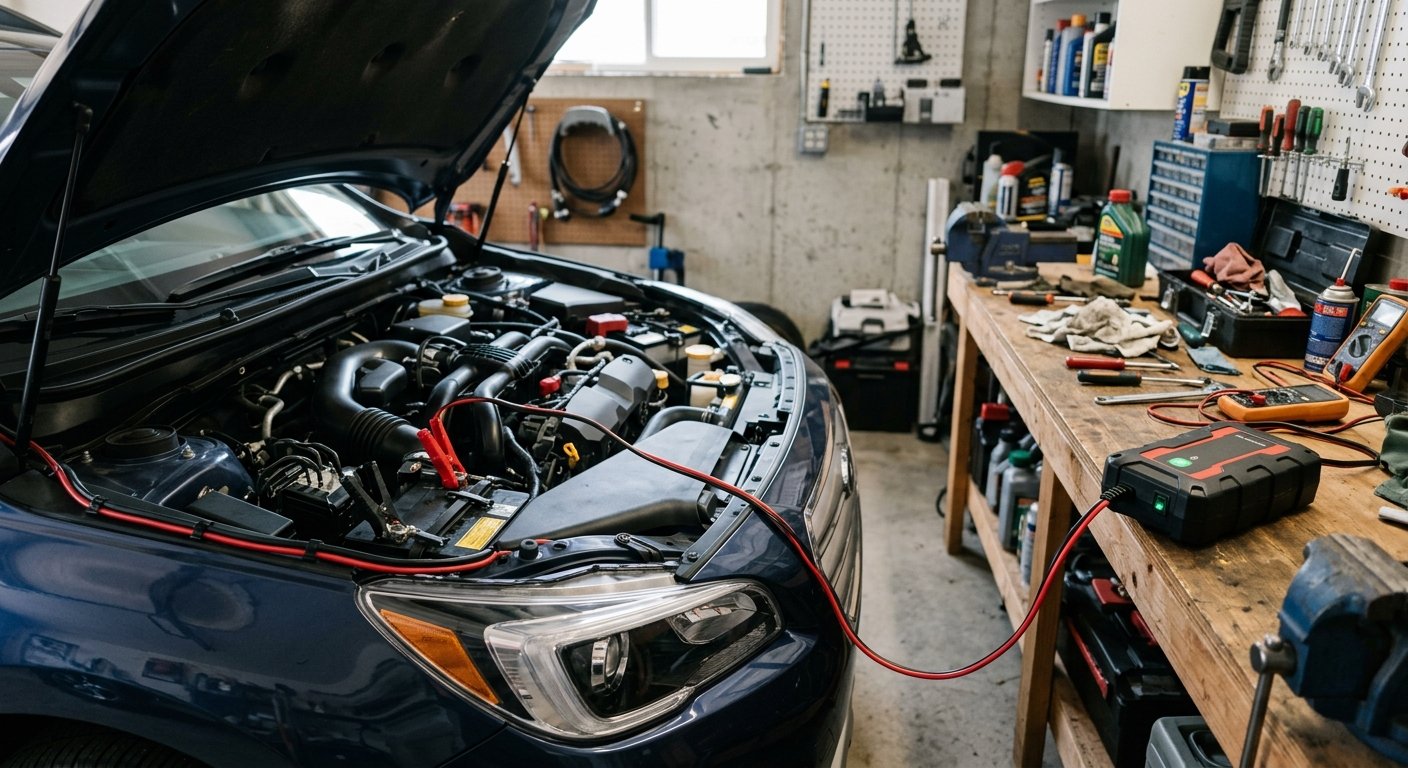
A maintainer is not the same as a jump starter. It is meant to support a battery over time, usually when a car sits between drives. The first check is battery type. Lead-acid, AGM and lithium batteries can have different charging requirements, and the vehicle manual or battery label should guide the choice. A maintainer that is wrong for the battery is not a bargain, even if it has a familiar plug and a good sale price.
Connection style matters because repeatability matters. Crocodile clips can be useful for occasional use, but a fused quick-connect lead can make regular maintenance easier if it is installed safely. The cable route should avoid fans, belts, hot parts, hinges and sharp edges. If the car is parked outside, the maintainer and extension lead need weather-appropriate placement. Do not assume a garage tool is safe in rain or standing water.
Look for clear status lights, understandable fault messages and a manual you can read before the battery is already weak. A device with ten modes can be helpful for an experienced owner, but it can also create mistakes if the car is only maintained twice a year. For a second car, weekend car or seasonal vehicle, simple, correct and visible often beats complex and forgotten.
Final buying check
A sensible maintainer routine includes a short visual check before walking away. Confirm the lead is not under strain, the clamps or connector are seated, the charger is in the right mode, and the cable cannot be tripped over or pinched by a door. If the car is stored for weeks, set a calendar reminder to inspect the area rather than assuming the first connection remains correct forever.
Useful external references
For disclosure context, read the FTC guidance on endorsements and reviews. For tyre safety context, see NHTSA tire safety information. For maintenance timing context, see the AAA maintenance checklist.
Parking pattern decides the maintainer
A battery maintainer is most useful for cars that sit long enough for small drains to matter: weekend cars, second vehicles, seasonal cars and cars with alarms or dash cams using parking mode. The right unit depends on where the vehicle is parked. A garage with a nearby socket can use a simple lead and indicator. A car parked outside may need weather-resistant routing, a safer cable path and more attention to extension lead limits.
Check chemistry and connection method before buying. Many modern maintainers support flooded, AGM or lithium batteries, but the mode must match the battery installed in the car. Ring terminals are convenient for repeat use, while clamps are better for occasional charging if access is easy. Do not use a maintainer to mask a failing battery, corroded terminals or charging-system fault. If the car struggles after normal driving, testing comes before another accessory.
Battery type and access caveats
A maintainer is not a universal cure for a weak battery. The label should match the battery chemistry and the car should be parked where leads can be routed without being crushed by a bonnet or door seal. Ring terminals are useful for a car that sits often, while clamps may be better for occasional use. If the battery is already failing, a maintainer may keep it limping along without solving the starting problem. Check the manual, ventilation needs and any alarm or tracker draw before leaving the car connected for long periods.
FAQ
How should a beginner start?
Start with one job, one surface and one small set of tools. Add products only when you can explain the gap.
Are expensive products always safer?
No. Price does not replace label clarity, surface fit or a careful routine.
Should I trust exact scores?
Only if the scoring method is clearly explained. Car Care File avoids fake precision and explains criteria instead.