Car vacuum features that matter for real interior mess
The vacuum features that help with crumbs, pet hair, seat rails, boot corners and daily-driver dirt.
Short answer
Look for useful attachments, easy bin cleaning, enough reach and a shape that fits the car. Suction claims alone do not tell the full story.
How to read this guide
Interior gear needs reach, softness and easy cleanup. Crumbs, dust, pet hair and sunscreen residue behave differently, so a single miracle product is rarely the answer.
A cabin kit should be small enough to keep together and clear enough that another driver can use it without guessing which towel touches glass or screens.
A specialist product can be worth buying when the surface is sensitive or the job repeats often. The mistake is buying a specialist bottle because the shelf looks more professional with it there.
A general product can be enough when the surface is forgiving and the routine is simple. The label still matters, because a normal interior or wheel cleaner can be wrong for screens, raw trim or delicate finishes.
Storage changes the value of a product. A towel that dries properly, a sprayer that can be rinsed and a charger that can be checked easily will get used more safely than gear hidden behind a stack of boxes.
The most useful buying decision is often the one that removes clutter. If two products do the same job, keep the clearer label, safer surface guidance and easier maintenance routine.
Buying criteria
Use these checks before a product earns shelf space.
Job fit
Name the exact job before comparing products or accessories.
Surface safety
Check paint, plastics, screens, leather, rubber and wheels before use.
Storage and shelf life
Avoid products that need storage conditions you cannot provide.
Value after three uses
Ask whether the product still saves time or risk after normal repeated use.
Practical tradeoffs
Mistakes to avoid
- Buying a second product before recording why the first one failed.
- Ignoring the label and using a chemical on the wrong surface.
- Mixing paint towels, wheel towels and interior towels.
- Trusting a marketing claim more than the vehicle manual or product instructions.
Setup and maintenance notes
Vacuum notes for real mess
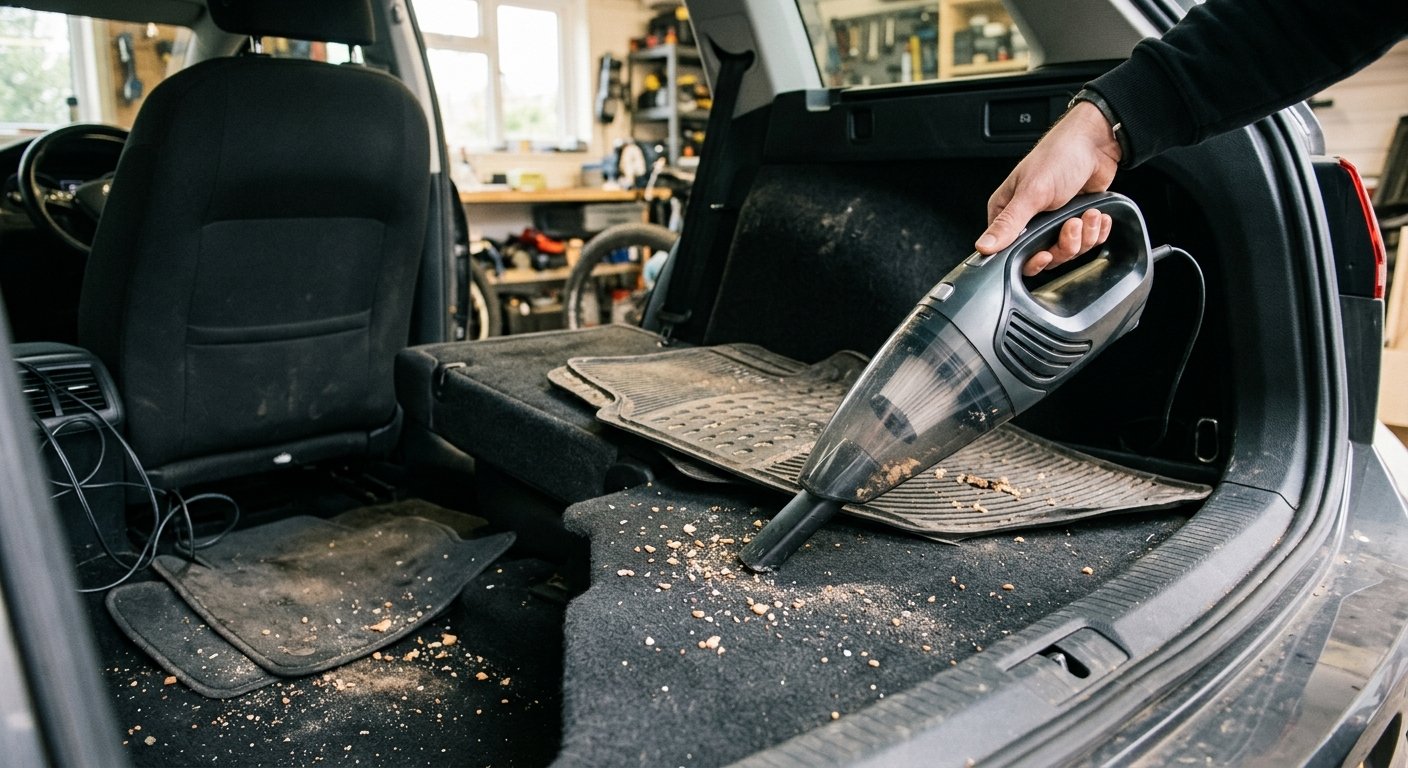
Interior vacuum reviews often focus on suction, but the shape of the mess decides the tool. Crumbs in seams need a narrow crevice tool. Pet hair on fabric may need a brush or rubber attachment. Sand in mats needs agitation as much as airflow. Dust in vents needs a soft brush and patience. A high-powered unit with the wrong nozzle can still leave the car looking unfinished.
Cordless vacuums are convenient when the car is parked away from the house, but runtime and filter cleaning matter. A small bin can fill quickly with winter grit, pet hair or snack crumbs. A washable filter is useful only if it dries fully before the next use. Corded vacuums can be stronger and cheaper, but they need a safe power route and enough cable for the boot, rear seats and front footwells.
Before buying a car-only vacuum, check whether a home vacuum with the right attachments already solves the job. The dedicated tool is worth considering when it stays in the car, reaches tight spaces and can be emptied without making a second mess. Store nozzles together, because a missing crevice tool can turn a good vacuum into a bulky dust collector.
Final buying check
Noise and storage deserve attention too. A loud vacuum can be fine on a driveway and awkward in shared parking. A bulky hose can reach well but be annoying to pack away. If you often clean after children, pets or outdoor hobbies, choose attachments that are sturdy and washable. If the car only needs light dust removal, a compact tool with a clean storage bag may be enough.
Useful external references
For disclosure context, read the FTC guidance on endorsements and reviews. For tyre safety context, see NHTSA tire safety information. For maintenance timing context, see the AAA maintenance checklist.
Interior mess decides the vacuum, not the wattage claim
Pet hair, dry grit, cereal crumbs and damp leaf debris need different vacuum behavior. A commuter who mostly cleans floor mats may need a short hose and a brush that is easy to knock clean. A family car with child seats needs crevice reach around rails, seat gaps and boot corners. Strong suction helps, but a bulky body that cannot reach the mess will stay in the garage while the crumbs remain in the car.
Look closely at emptying and filter care. Small cordless vacuums are convenient until the bin fills halfway through the job or the filter clogs with fine dust. A 12V unit avoids charging worries but depends on cable length and socket position. Attachments matter more than accessory count: a narrow crevice tool, a soft brush for plastics and a sturdy hose usually beat a box of loose nozzles. Avoid using a wet-dry claim as permission to collect liquids unless the manual clearly explains filter and tank cleanup.
Where small vacuums usually fail
Small vacuums usually disappoint in three places: seat rails, boot mats and damp grit. A wide nozzle is fast on open carpet but poor between the rail and centre console. A brush can lift pet hair but may scatter sand if suction is weak. Cordless convenience is useful only if the battery still has enough run time after the filter starts loading with dust. Before buying, picture the dirtiest part of the car and check whether the hose, crevice tool and waste bin can handle that job without turning cleanup into a second chore.
FAQ
How should a beginner start?
Start with one job, one surface and one small set of tools. Add products only when you can explain the gap.
Are expensive products always safer?
No. Price does not replace label clarity, surface fit or a careful routine.
Should I trust exact scores?
Only if the scoring method is clearly explained. Car Care File avoids fake precision and explains criteria instead.