Winter car care kit checklist for UK and US drivers
A cold-weather checklist for visibility, battery support, tires, storage and roadside delays.
Short answer
A useful winter kit covers visibility, grip, battery support, warmth and delays. Keep it compact enough to stay in the car.
How to read this guide
Tyre and tire care is about cold pressure, tread, sidewall condition and a tool you trust enough to use. A gauge that is hard to read will not build a habit.
Pressure work should be calm and repeatable, not a panic before a motorway trip. Keep notes, compare against the placard and replace suspect tools.
A specialist product can be worth buying when the surface is sensitive or the job repeats often. The mistake is buying a specialist bottle because the shelf looks more professional with it there.
A general product can be enough when the surface is forgiving and the routine is simple. The label still matters, because a normal interior or wheel cleaner can be wrong for screens, raw trim or delicate finishes.
Storage changes the value of a product. A towel that dries properly, a sprayer that can be rinsed and a charger that can be checked easily will get used more safely than gear hidden behind a stack of boxes.
The most useful buying decision is often the one that removes clutter. If two products do the same job, keep the clearer label, safer surface guidance and easier maintenance routine.
Buying criteria
Use these checks before a product earns shelf space.
Job fit
Name the exact job before comparing products or accessories.
Surface safety
Check paint, plastics, screens, leather, rubber and wheels before use.
Storage and shelf life
Avoid products that need storage conditions you cannot provide.
Value after three uses
Ask whether the product still saves time or risk after normal repeated use.
Practical tradeoffs
Mistakes to avoid
- Buying a second product before recording why the first one failed.
- Ignoring the label and using a chemical on the wrong surface.
- Mixing paint towels, wheel towels and interior towels.
- Trusting a marketing claim more than the vehicle manual or product instructions.
Setup and maintenance notes
Cold-weather kit notes
A winter kit should match the weather you actually meet, not a dramatic snowstorm you may never see. In parts of the UK, visibility, rain, frost and short daylight can matter more than deep snow. In colder parts of the US, snow brushes, gloves, traction aids and battery support may be more important. The kit earns its place when it handles the common delay and the bad day without taking over the whole boot or trunk.
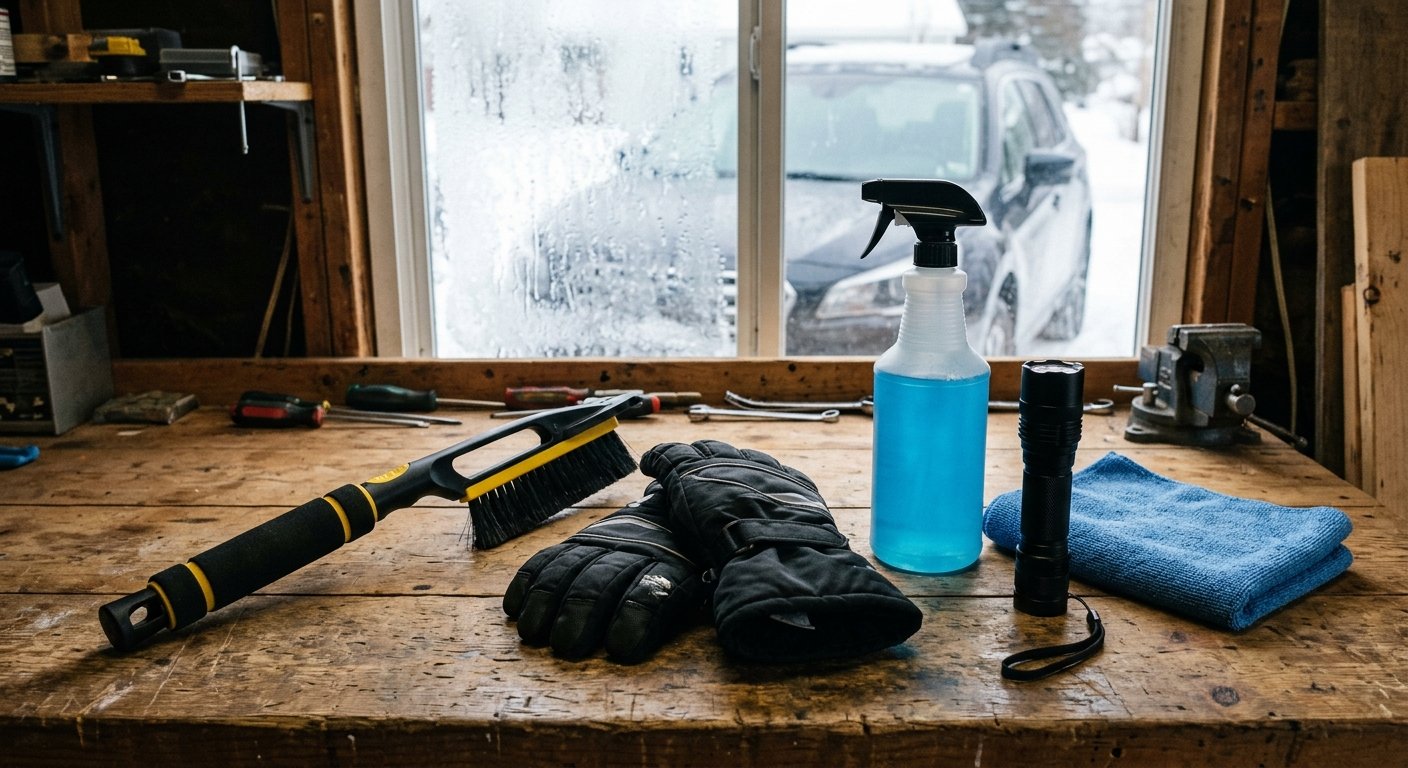
Start with visibility. Keep screen wash rated for the expected temperature, a scraper that does not flex uselessly, a cloth for interior misting and a way to keep lights and plates clear. De-icer can help, but it should be stored upright and checked for leaks. Avoid using hot water on frozen glass. It can crack glass or refreeze in awkward places.
Then add delay support: gloves, a compact blanket, a phone power bank, a small torch and basic high-visibility gear where appropriate. For tyre and battery concerns, the right answer may be a pressure gauge, inflator and maintainer rather than a bigger emergency bag. Refresh the kit before the first cold snap, not after the first morning you need it.
Final buying check
At the end of winter, remove the kit and check it rather than forgetting it until next year. Liquids can leak, batteries can discharge, gloves can get damp and food or water can become unsuitable depending on storage conditions. Repacking the kit also reminds you which items were actually used. That is the best signal for what to keep, replace or remove before the next cold season.
Useful external references
For disclosure context, read the FTC guidance on endorsements and reviews. For tyre safety context, see NHTSA tire safety information. For maintenance timing context, see the AAA maintenance checklist.
Regional winter checks for US and UK drivers
A winter kit should match the kind of delay the driver is likely to face. In much of the UK, visibility and wet cold are the daily problem: screenwash rated for low temperatures, a scraper that does not gouge glass, a drying towel for interior fogging and gloves that stay in the car. In colder US states, the same kit may need stronger de-icer, a compact shovel, battery support and traction items. The right kit is local, not a universal bundle.
Check expiry and storage before winter starts. Aerosols and liquids can leak, gloves can stay wet, and a torch with dead batteries is only decoration. Keep anything needed from outside the vehicle accessible from the cabin or a side pocket, not buried below luggage. Do not let winter accessories create false confidence: poor tires, a weak battery and worn wipers are maintenance issues first, product purchases second.
Regional winter kit differences
US and UK drivers often need the same core kit but for different reasons. A commuter in northern states may prioritise a scraper, washer fluid rated for low temperature and a compact shovel. A UK driver may care more about wet visibility, de-icer, gloves and a towel for door seals because snow can be less predictable but damp cold is common. The kit should live where it can be reached when doors are iced or the boot is full. Avoid packing liquids that can leak into trim or tools that scratch glass and paint.
FAQ
How should a beginner start?
Start with one job, one surface and one small set of tools. Add products only when you can explain the gap.
Are expensive products always safer?
No. Price does not replace label clarity, surface fit or a careful routine.
Should I trust exact scores?
Only if the scoring method is clearly explained. Car Care File avoids fake precision and explains criteria instead.